

What the World Has Taught Me About Hope, Parenting, and the Future
When I was younger, long before I became a father, I used to wonder whether it was responsible to bring children into this world. I looked out at the world around me and found it wanting. Who did I think I was to bring children into a world that moved in turmoil? Back then, so many years ago now, I don’t believe I was even equipped to be parenting in a changing climate.
Twenty years ago the headlines were unsettling. Wars. Pollution. Coups. Economic uncertainty. Every generation seems convinced the world is becoming more complicated than the one before it, and mine was no different. I honestly questioned whether it was fair to bring children into a future that felt so uncertain.
Then I became a dad, and something unexpected happened.
The world didn’t suddenly become safer. The problems didn’t disappear. But my perspective changed completely.
I stopped asking whether the world deserved my children.
Instead, I started asking what kind of world my children would inherit, and that question has stayed with me ever since.
An International Problem
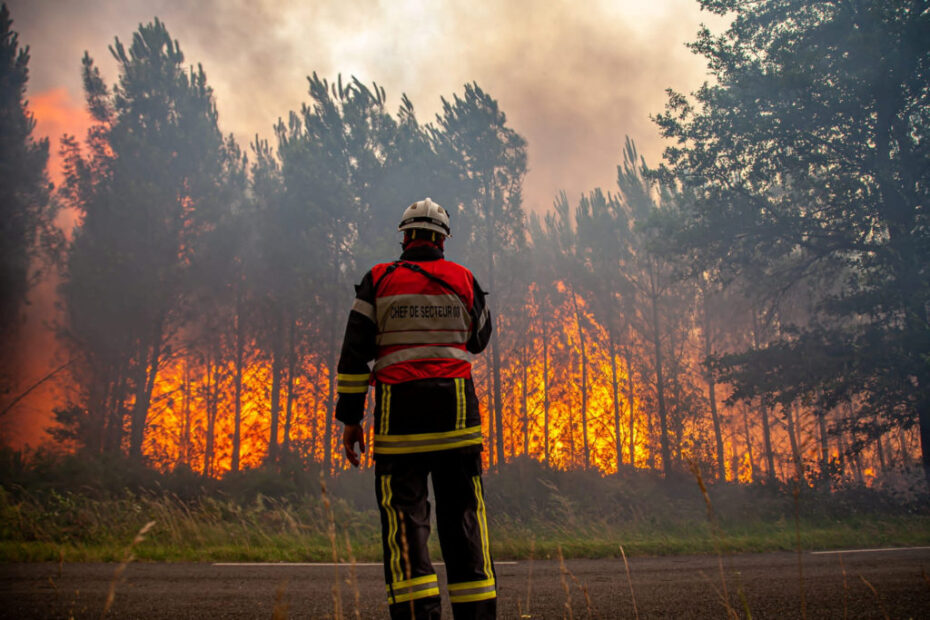
This summer, like millions of others, I’ve watched images of entire communities threatened by wildfire. I’ve seen skies turn orange from smoke drifting hundreds, even thousands of kilometres from where the fires began. I’ve listened as politicians argued over whose fault it is, while firefighters worked themselves to exhaustion trying to protect lives and homes.
Some blamed Canada. Others blamed climate change. Others blamed poor forest management. And all of it led to questions about what we were doing wrong.
But I couldn’t shake the feeling that we were asking the wrong question. Wildfires no longer behave like local emergencies. Smoke doesn’t stop at provincial borders. It doesn’t recognize international boundaries. It doesn’t pause at customs checkpoints. Smoke simply goes where the wind takes it.
So why are we still trying to solve a global problem with systems designed for a different era?
What if countries treated catastrophic wildfires the same way they treat aviation safety, disaster response, or disease outbreaks? Imagine a permanent international wildfire organization that shared aircraft, firefighters, research, satellite monitoring, and rapid-response teams. Instead of every nation scrambling independently, we would prepare together, respond together, and learn together.
Maybe that’s an ambitious idea. Maybe not. After all, there are already some of these ideas in place.
But the more I thought about it, the more I dug in and researched, I’ve realized this article isn’t really about wildfires.
It’s about inheritance. Every generation inherits a world it didn’t create. And every generation leaves one behind.
Those Damn Boomers
My generation inherited extraordinary opportunities. We experienced decades of technological progress, economic growth, and remarkable advances in medicine, communication, and quality of life. But we also lived as though many of Earth’s resources were endless, and as though tomorrow would somehow take care of itself.
We didn’t create every problem facing our children. But we have undoubtedly contributed to some of them. That isn’t something I say with shame. It’s something I say with responsibility.
I understand why some younger people look at my generation with frustration. Whether that frustration is always fair isn’t really the point. Every generation eventually discovers that the choices it made, both good and bad, become someone else’s starting point.
We can’t rewrite the past. But we still have a say in the future. And as parents and grandparents, perhaps our greatest responsibility isn’t defending the decisions our generation made.
Perhaps it’s asking ourselves a different question.
What kind of ancestors do we want to be? Do we want to be remembered as the generation that argued endlessly over who was to blame? The one that threw up its hands and declared, “Oh well, best of luck!”?
Or as the generation that finally recognized that some problems had become too large for any one country, one government, or one ideology to solve alone?
I don’t pretend to have all the answers. Maybe an international wildfire alliance is part of the solution. Maybe it isn’t. But I do know this.
The Kids Are Alright?
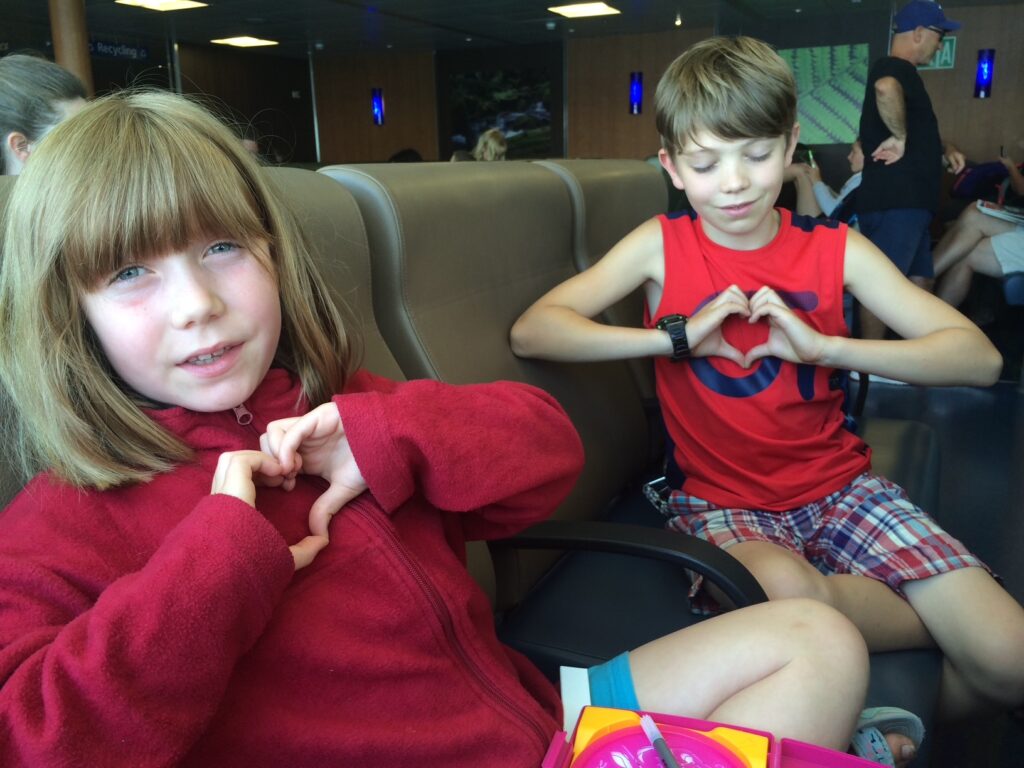
Zachary’s twenty now. Twenty! I still catch myself doing the math on that one, because in my head he’s about eleven, losing his mind over some video game, and somehow that kid turned into a young man who’s out there figuring out his own path, making his own decisions, some of which I agree with and some of which I might bite my tongue about, because that’s what you’re supposed to do at this stage. You did your job. Now you get to watch, mostly from a respectful distance, and resist the urge to jump in every time.
And Beth-Rose is just about to turn eighteen, which means she’s standing right at that edge, one foot still in our house and one foot already out the door in just a few more weeks, even if Heather and I don’t want to admit it out loud. She’s got opinions about everything these days, including my driving, which she shares generously and without being asked. Some days that drives me a little crazy. She’s got her own opinions about things, including the driving skills of her parents, and everyone else on the road. But hey, those opinions are hers, and I’m okay with that.
Inheriting a World On Fire
And so I watch both of them stepping out into a world that’s on fire, sometimes literally, and I won’t pretend I don’t worry. Any parent who tells you they don’t is lying to you or to themselves. But I’ve also started noticing something else when I watch them. They don’t seem to be paralyzed by any of it. They argue about politics at the dinner table, they roll their eyes at the news, and then they get up the next morning and go live their lives anyway. My kids build. And they plan. They show up for their friends. I don’t believe they’ve inherited my anxiety nearly as much as I feared they would, and if anything, they’ve handed a little bit of their own steadiness back to me. They’re also showing me that parenting in a changing climate means focusing a little more on hope rather than despair.
Building Something Better
My daughter is preparing to build her own life. My son is finding his place in the world. Like every parent, I want them to inherit a future that offers more opportunity than fear.
But I can’t promise them that. No parent can. What I can do is refuse to surrender to cynicism. I can choose hope over despair. Not the kind of hope that pretends everything will somehow work itself out. The kind of hope that believes people are still capable of building something better together.
I don’t want my children to inherit my anxiety. I want them to inherit a little of my determination.
Determination to solve problems instead of simply assigning blame. Determination to look beyond borders when the challenges themselves ignore borders. And ultimately, the determination to become better ancestors than we’ve been critics.
Because every generation leaves something behind.
My hope is that, when Zachary and Beth-Rose look back at ours, they won’t remember us simply for the problems they inherited or even the mistakes we made.
They’ll remember that, when we finally understood the size of the challenges before us, we chose to start building a better future anyway.

The light at the end of the tunnel is the headlight of an oncoming train. World War III is coming, maybe. But they won’t call it that until after we are dead. The world will continue for a very long time after we are gone. A mere 5000 years from now, the oil refineries will be gone and buried, your, and my house will have decade, fed new growth that in turn will return to dirt. None of what we did in our lives, including having children, will be of any consequence. So smell the flowers while they are in bloom. And go pull some weeds out of your garden, even though we both know it won’t stop them from coming back next year. Hugs and kisses Mikie.
Oh my god man, when did you become so cynical?! I honestly don’t think you would think this way if you had kids. At least, not out loud…
Awwwww they were so little. Look at them now